Krishan Rajapakshe’s practice begins and insists on drawing. Everything emerges from the line and eventually returns to it. Drawing is not a medium among others but a structural condition of thought. It is where fractured bodies, unstable architectures, and political residues take provisional form. The line does not illustrate experience. It constructs a field in which subjectivity, desire, and space are negotiated.
From this ground, the work migrates into printed editions, layered textile environments, and collective formats that activate space. Installations operate as expanded drawings, navigable compositions in which viewers encounter shifting orientations and unstable territories. Fiction and lived reality remain deliberately entangled. Masks, fragments, and spatial interruptions function as structural devices rather than symbols, allowing the work to question how authority is embedded in everyday perception.
Rajapakshe’s practice explores the politics of desire, space, and subjectivity within conditions shaped by migration, economic rupture, and inherited systems of power. Rather than directly representing trauma, the work registers its spatial and bodily residue. Authority and rhetoric are interrogated through fragmentation, interruption, and the reorganisation of visual and acoustic hierarchies.
Drawing serves as the generative score from which choreography and social practice unfold. Rajapakshe is Co-founder of Khaya Practice: Zine Archive, a self-organised library and publishing space; WeAreBornFree Community Radio; and the Kitchen_Practice curriculum. These platforms operate as extended territories of the drawing field. They function as living infrastructures that inform and sustain his aesthetic production.
Radio becomes an acoustic drawing, structured through rhythm, interruption, and layered speech. Listening is treated as a political act. Self: Publishing enables the drawn fragment to circulate beyond institutional containment, constructing alternative archives and modes of distribution. The communal kitchen operates as a temporal composition, where collective presence and embodied exchange become spatial practices rather than representations.
Across these intertwined movements, Rajapakshe approaches art as an infrastructural field rather than a fixed object. By blurring boundaries between image and environment, fiction and lived condition, surface and body, his work demands new modes of seeing and listening. Drawing remains the organising force, continuously redrawing the territories through which bodies gather, narratives circulate, and authority is perceived.
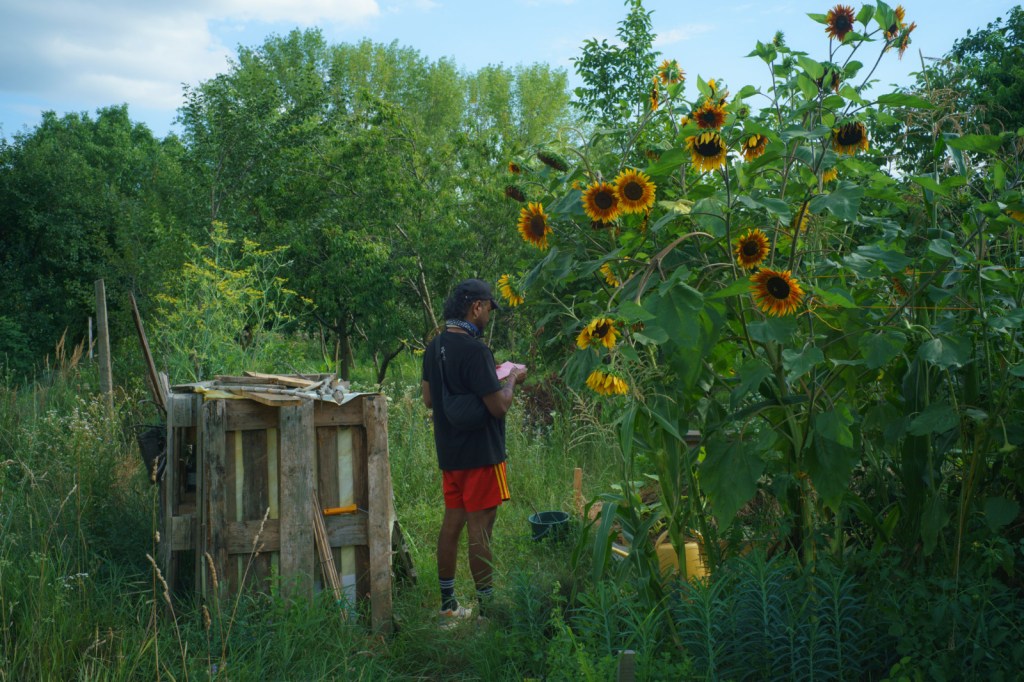
 Krishan Rajapakshe